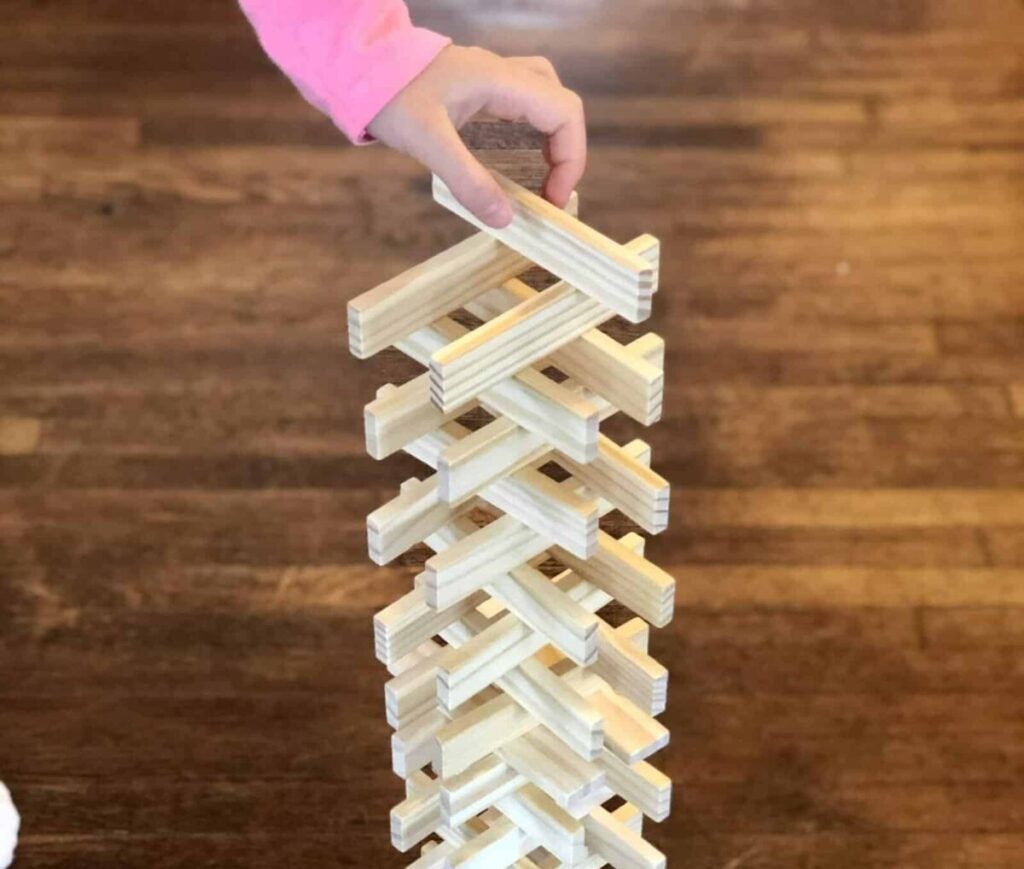
Tall Towers In Early Engineering Play
“How can we make it bigger?” Rowan asks with a grin, her eyes shining as she looks up at the tower of blocks she and Linnea have built.
“Let’s stand on this table! We can make it taller!” Linnea suggests eagerly, her voice buzzing with possibility.
The girls turn to me with pleading eyes, and honestly, how could I say no? This moment—the last hour of the day—is pure magic. The space in the front foyer of our early childhood center is theirs, a laboratory for discovery and daring ideas. Soon, parents will arrive, the hustle and bustle of pick-up time will take over, and this fragile tower might not survive. But right now? Nothing is more thrilling than watching these four-year-olds explore the challenge: how to build bigger, higher, stronger.
Early childhood is a crucial time for learning through play, and Rowan and Linnea’s question, “How can we make it bigger?” is the perfect spark for engineering exploration. Without even realizing it, these girls are laying the groundwork for scientific thinking. They are grappling with fundamental concepts—balance, gravity, weight, and force—through hands-on experimentation.
“Be careful, don’t knock it over!” Linnea warns as Rowan carefully adds another block. The room holds its breath.
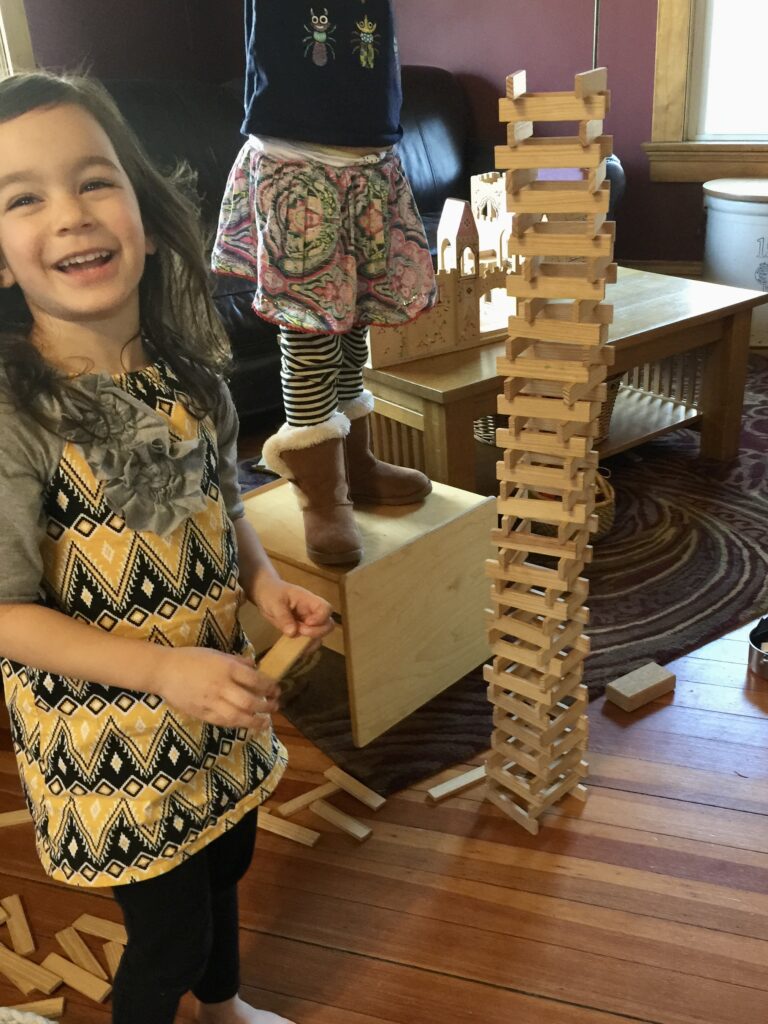
Each new block brings the tower closer to greatness—or collapse. This is trial and error in action, the essence of scientific inquiry. They are testing ideas: Will it stand if I put this block here? How much higher can we go before it falls? These are not just games; they’re the seeds of engineering—figuring out how to design, build, and problem-solve.
Play is the foundation of early learning, and within it lies the spark of engineering thinking. When children build with blocks, design forts, or tinker with loose parts, they’re not just having fun—they’re developing essential pre-engineering skills. These playful moments introduce them to concepts like structure, stability, spatial awareness, and problem-solving, all of which are critical to engineering.
Through trial and error, children begin to understand how materials behave. They learn that a wide base supports a tall tower, that heavier objects need stronger foundations, and that balance is key to keeping things upright. These discoveries are rooted in physical science and engineering principles, and they emerge naturally as children test their ideas and adjust their designs. Each collapsed tower or wobbly bridge becomes an opportunity to rethink, rebuild, and refine.
“Be careful, don’t knock it over!” Linnea warns as Rowan carefully adds another block to the growing tower. The room grows still as everyone watches. Rowan and Linnea know that each block they add to the tower will either bring it closer to standing tall or make it topple over. This moment is an experiment with trial and error in the context of science—understanding how the world works by testing out their ideas and watching what happens.
Collaboration during play also nurtures engineering mindsets. When children work together to build something, they share ideas, negotiate roles, and troubleshoot challenges. This teamwork mirrors real-world engineering, where innovation often comes from collective problem-solving. As they communicate and experiment, children develop resilience, creativity, and a willingness to iterate—skills that will serve them well in any STEM field.
“I think it’s crooked,” Linnea observes. “Can you move those blocks over a little?”
Together, they adjust the structure, watching how tiny shifts affect stability. This is hands-on physics: forces in motion, the interplay of weight and balance. By experimenting, they’re learning how to control these forces, building the skills of observation and adaptation essential to engineering.
Their teamwork only adds to the learning. Other friends join, passing blocks and debating where to place them. Collaboration is key—just like in real-world science and engineering—where ideas are shared, challenges overcome together, and social skills like listening and turn-taking are practiced.
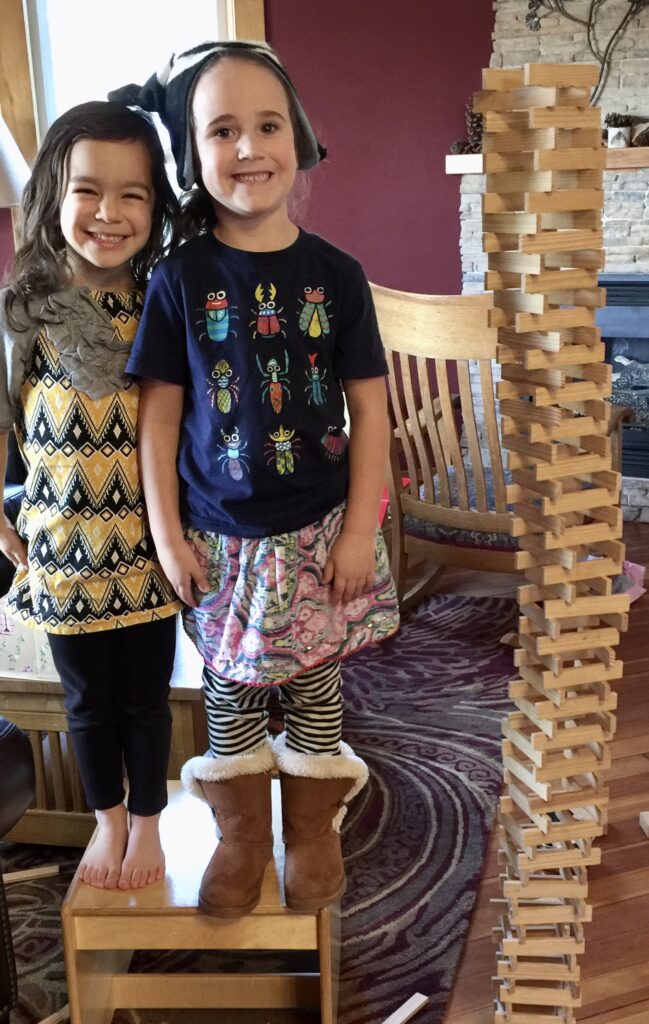
This type of play is the beginning of scientific inquiry. Young children may not recognize it yet, but they’re developing critical thinking and problem-solving skills. They’re asking questions like, What will happen if I add this block here? How can I make this tower taller without it falling? These are the same types of questions that scientists ask when they experiment, observe, and test out their theories.
Ultimately, play is where engineering begins. It’s where children learn to ask “What if?” and “How can we make it better?” These questions fuel exploration and lay the groundwork for future learning in science, technology, engineering, and math. By encouraging open-ended play, we’re not just supporting imagination—we’re cultivating the next generation of thinkers, builders, and innovators.
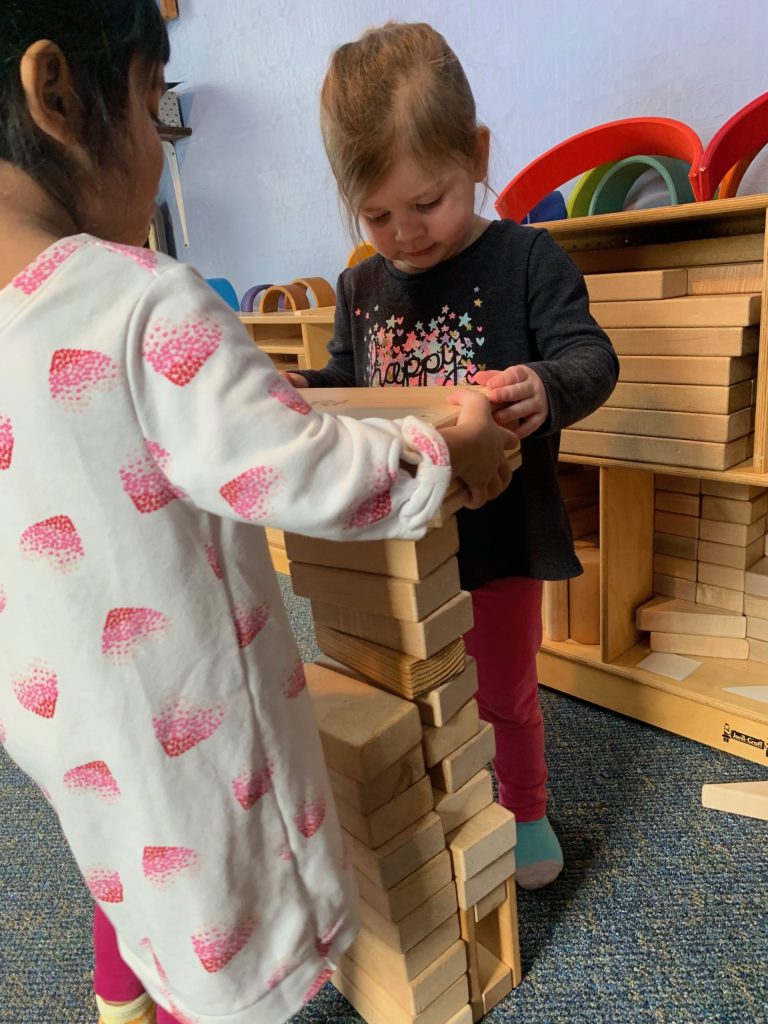
As the parents begin arriving, I notice some younger two-year-olds in the unit block area, carefully stacking blocks in their own way. It’s heartwarming to see the older children share their knowledge and ideas, guiding the younger ones through their own small experiments. This is what happens when children of all ages share space and learning opportunities: the older ones naturally mentor the younger ones, and the younger ones get to learn from their peers’ experiences. This intergenerational play sparks continuous learning, as engineering ideas flow freely among all ages.
It’s moments like these—when children ask “How can we make it bigger?” and dare to experiment—that the foundations of early engineering and scientific thinking are built. Encouraging this kind of curiosity and risk-taking helps young learners develop critical problem-solving skills, creativity, and confidence in their ability to explore and understand the world.