Uncovering Data in Play
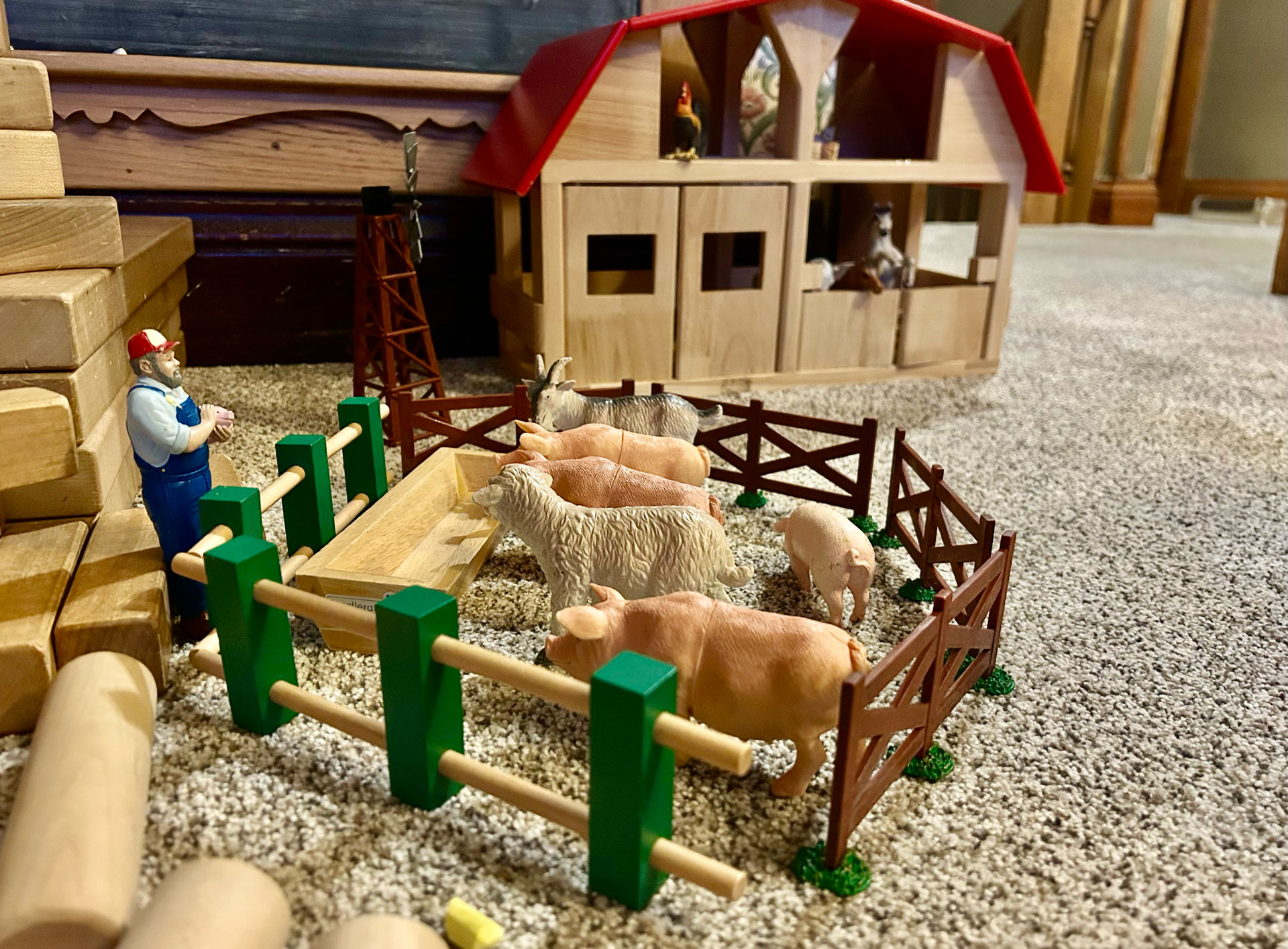
“We have more pigs than sheep,” Jacoby tells his friends. Preschoolers are naturally curious, noticing little things in their everyday play. It might be, “How many red cars do we have?” or “Who has the biggest apple today?”
This is actually the start of data recording—and it happens long before they can write numbers or fill out charts. The good news is they’re also practicing early engineering skills without even realizing it.
Sometimes when we read state standards, they can feel way beyond what most young children are developmentally ready for. But when we look closely at children’s play, we often find pieces of those standards already happening. Instead of pushing curriculum they’re not ready to understand, we can meet the standards at the level of our learners by noticing the math, problem-solving, and inquiry already woven into their everyday play.
Young children get lots of chances to explore data in ways that feel natural. It doesn’t have to look like a formal lesson to meet those state standards. Usually, it looks like playful curiosity: asking questions, gathering information, and testing ideas. Maybe it’s, “How many kids rode the bus today?” or “Which block color do we have the most of?” In the process, they’re observing, thinking critically, and trying out solutions—all early engineering habits in disguise. Every question becomes a tiny design experiment, with children predicting, checking, adjusting, and trying again.
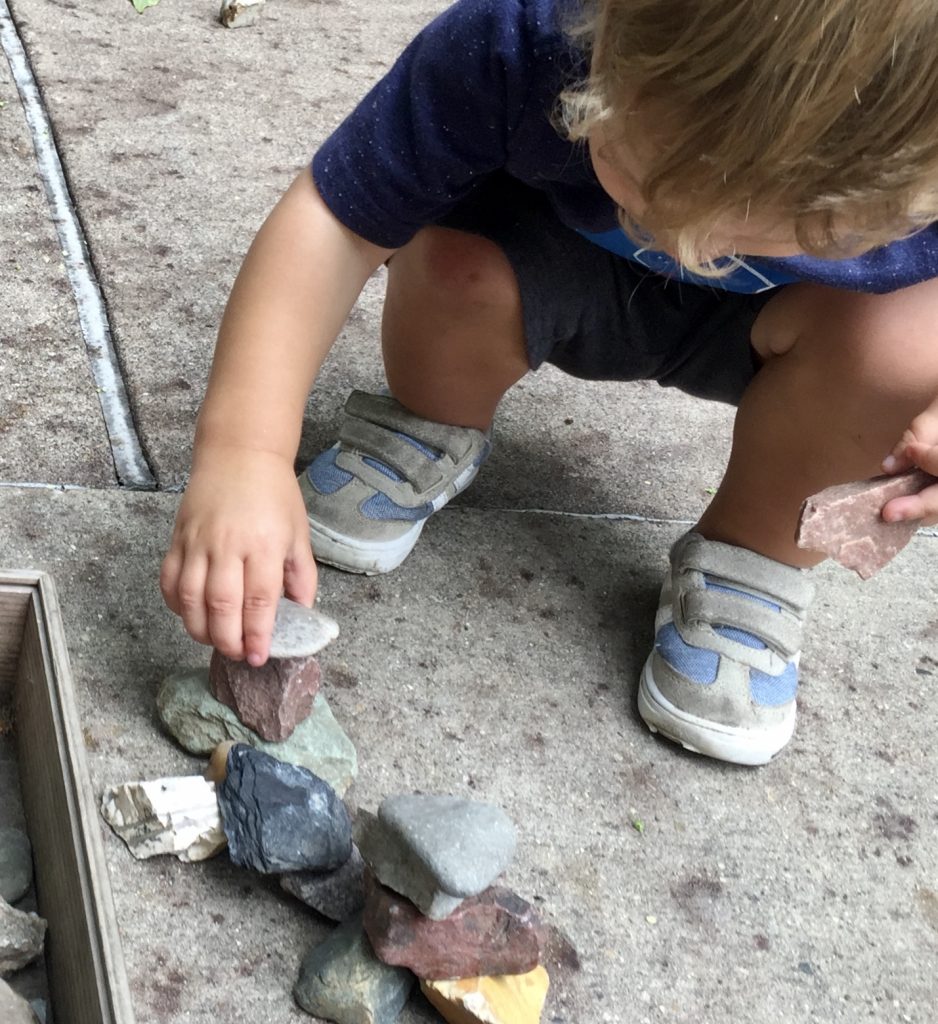
Sorting and classifying are key. Rocks, buttons, toy cars, blocks, leaves, pom-poms, even dinosaurs—whatever children can get their hands on. When they organize, stack, or line up these objects, they’re not just recording data—they’re solving problems. “If I put the biggest block at the bottom, the tower won’t fall,” says Mallory. “See? The smaller ones can go on top.” She’s experimenting with balance, weight distribution, and stability without realizing it. And when she tries again—when the tower falls, or leans, or tilts—that’s iteration, the heart of engineering.
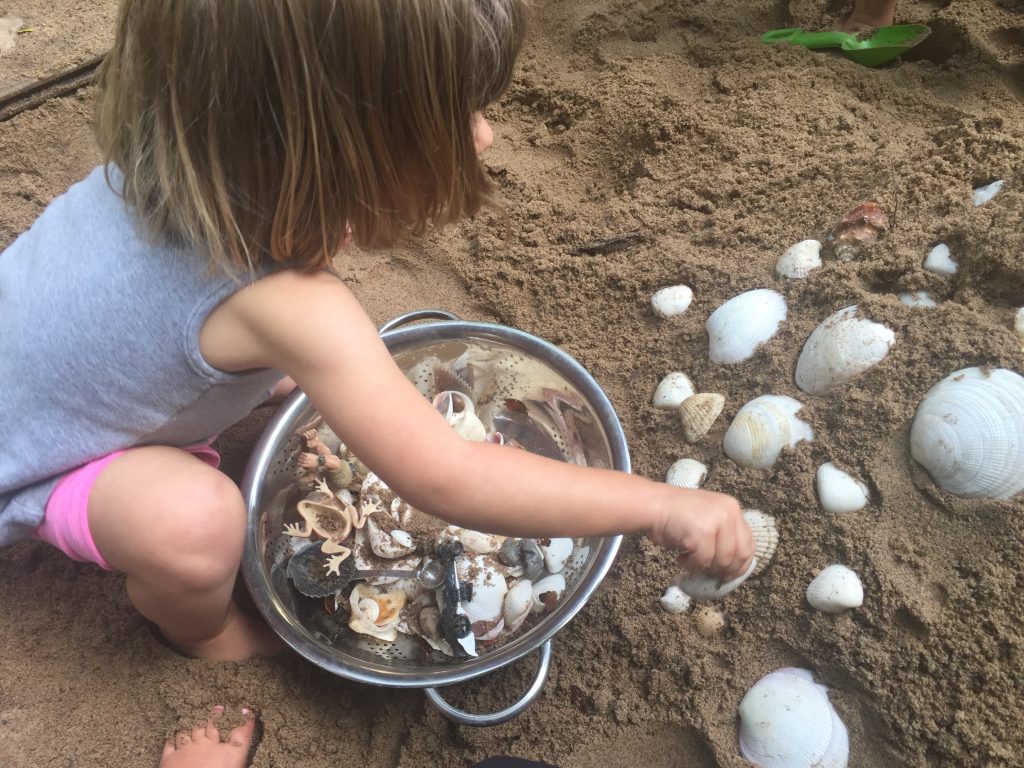
Outdoor play is another goldmine for exploring data and engineering. After a nature hike or in the sandbox, children might collect, sort, and line up rocks, sticks, or pinecones by size, shape, or color. Some begin building tiny towers or bridges, experimenting with how to stack and balance pieces so they don’t fall. Others might create paths, compare lengths of sticks, or notice which natural materials roll, slide, or tip over more easily.
These aren’t just cute moments—they’re children running their own design tests, revising their ideas until something finally works.
The art center offers the same opportunities. Sorting markers by color, counting pom-poms for a collage, or organizing stickers by size are all small experiments in data recording and design thinking. Every choice—where to place a sticker, which color to use, how to stack pieces—becomes a mini engineering challenge, even in the middle of a messy masterpiece. Document that! It’s science happening right in the paint trays.
Once children have collected information, the next step is noticing patterns. Tally marks, charts, or simple drawings make the data visible, but the real goal is seeing results and making decisions based on what they observe. In engineering terms, this is testing, observing, and iterating.
The fun part is listening to what they notice. “There are more red crayons than yellow ones,” says Bron. They’re analyzing data, making conclusions, and letting those ideas guide their next design experiment.
These simple observations are the foundation of early engineering thinking and data literacy.

The beauty of weaving data recording into preschool play is that learning and play happen together. Children learn to ask questions, gather information, and make decisions—all essential skills for future mathematicians, scientists, and engineers. It all starts with small moments, like counting pigs and sheep on a tiny barnyard rug.